Divine Drop is commonly presented as a modern video slot that emphasizes cluster-based wins, cascading reels, and feature layers designed to concentrate payout potential into bonus sequences. Unlike classic payline slots where wins require aligned symbols across fixed lines, cluster slots award wins when groups of matching symbols connect in sufficient quantity. This structure changes how outcomes are read on the screen and typically increases the frequency of small wins through repeated cascades while reserving the largest results for feature-driven multipliers and bonus rounds.
As a digital slot format, Divine Drop is usually optimized for fast comprehension: clusters are highlighted, winning symbols disappear, and new symbols drop into place to create additional win opportunities. This cascading loop can repeat several times on a single paid spin, producing a chain outcome that is settled as one spin result. Understanding Divine Drop therefore depends on cluster rules, cascade behavior, and the conditions under which multipliers and bonus features are activated.
Core Game Structure And Cluster Win Principles

Divine Drop is typically built on a grid rather than on a traditional five-reel, three-row layout. In many cluster slots, the grid can be six by five, seven by seven, or another rectangular arrangement. The important structural detail is that wins are determined by adjacent symbol groupings rather than by left-to-right line alignment. A cluster win occurs when a minimum number of identical symbols connect orthogonally, usually through horizontal and vertical adjacency.
Cluster thresholds define how many symbols must connect to qualify as a win. For example, a game might require eight or more connected symbols, though the exact requirement depends on the specific rule set in the paytable. Higher-value symbols often require fewer instances than lower-value symbols, but cluster thresholds usually apply consistently across the symbol set unless otherwise stated. In Divine Drop, the clarity of the win system is determined by how visibly clusters are outlined, how the game counts connected symbols, and whether diagonal connections are excluded.
Because cluster evaluation differs from paylines, the paytable is the primary source for confirming qualifying cluster sizes and payout scaling. A transparent interface displays both the cluster size and the resulting payout when a win occurs.
Cascading Symbols And Chain Resolution
Cascading mechanics are central to Divine Drop’s pacing. When a cluster win occurs, the winning symbols are removed from the grid and replaced by new symbols that drop from above. This can create additional clusters, producing consecutive wins without requiring additional paid spins. Each cascade is typically considered part of the same original spin, and the final return for that spin is the sum of all cascade wins produced before the grid stabilizes.
Cascades can increase the frequency of small and medium wins because they create multiple opportunities to form clusters in quick succession. However, they can also increase variance when multipliers or special symbols are involved, since a single cascade sequence can produce an amplified result if a multiplier is triggered early and persists across subsequent cascades.
Divine Drop is most readable when the interface clearly separates each cascade step, showing which symbols formed the win, how much the win paid, and how the next drop changed the grid. A cascade history panel or on-screen tally can further support clarity, especially when multiple cascade wins occur in one spin.
Symbol Roles Wilds Special Tiles And Feature Icons
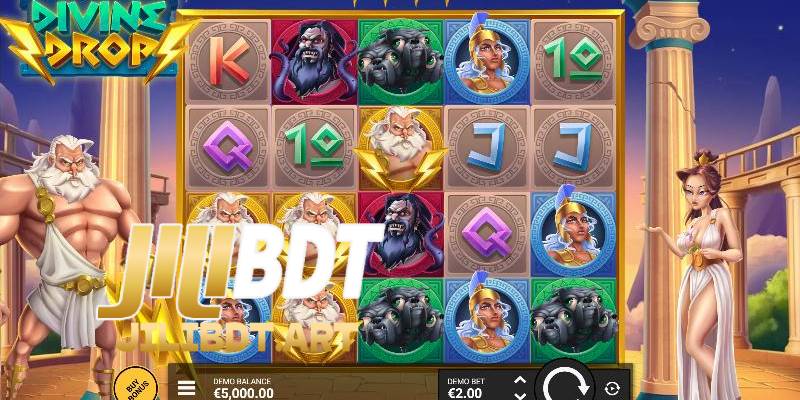
The symbol set in Divine Drop is generally divided into standard symbols and special symbols that modify outcomes. Standard symbols form clusters and pay according to cluster size. Special symbols are used to increase win potential by substituting, multiplying, or triggering features.
Wild symbols may appear in cluster slots to substitute for standard symbols, allowing clusters to reach qualifying size more often. In some designs, wilds can be sticky during a feature, meaning they remain on the grid across cascades or spins. Sticky behavior can create repeated cluster opportunities by anchoring substitution positions.
Feature icons may also appear, such as scatter symbols that trigger free spins or bonus rounds. In many cluster slots, scatter symbols do not need to connect to each other, but must simply appear in a defined quantity anywhere on the grid. Divine Drop is typically structured so that feature icons are easy to distinguish and are paired with clear trigger counters that show how close a spin is to activating a bonus.
Some cluster slots use special tiles that act as multipliers or prize values. These may appear as labeled symbols with a multiplier number or as “collect” symbols that interact with a bonus meter. When these features exist in Divine Drop, their function should be explained in the rules panel and reinforced during play through visual prompts.
Bonus Triggers And Free Spins Structure
Bonus rounds in Divine Drop are usually triggered by landing a specified number of scatter or feature symbols. Once triggered, the bonus sequence begins with its own rules, often including additional spins, enhanced symbol behavior, or improved multiplier potential. Free spins are one of the most common structures, where a fixed number of spins is awarded and the game uses a modified reel or grid configuration.
Within free spins, Divine Drop may introduce mechanics that are rare or less frequent in the base game. Examples can include higher multiplier frequency, sticky wilds, expanded grids, or special symbol drops that appear more often. These changes are designed to concentrate potential returns into the bonus, supporting a volatility profile where the base game acts as a pathway to higher-impact sequences.
Some implementations also include retriggering, allowing additional free spins to be awarded when new scatters appear during the bonus. If retriggers exist, the conditions should be disclosed clearly, as they can meaningfully influence the maximum feature length and the distribution of bonus outcomes.
Multiplier Systems And Win Amplification
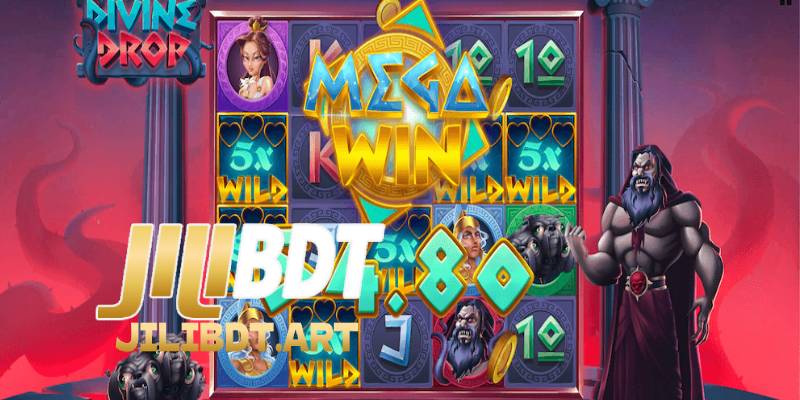
Multipliers are a common feature in cluster-based slots, often applied during cascade sequences or within free spins. In Divine Drop, multipliers may function as global modifiers that increase with each cascade, or as special symbols that apply a multiplier to the specific win in which they participate. Global multipliers are typically more impactful because they can influence multiple cascade wins within the same spin.
Incremental multipliers often start at a baseline value and increase when a win occurs, resetting when the spin ends. This design encourages extended cascade chains, as each additional cascade can be worth more than the previous one. During free spins, a multiplier may persist across spins, creating stronger accumulation potential than in the base game.
Win amplification systems are most transparent when the game displays the active multiplier prominently and shows how it affected the final payout. A clear win breakdown that separates base cluster value from multiplier value reduces confusion and supports reliable interpretation.
Volatility Profile And Expected Session Behavior
Divine Drop is generally experienced as a slot where variance is influenced by both cascade frequency and bonus concentration. Cascades can produce frequent small returns, but larger results are typically linked to bonus rounds and multiplier interactions. This can create sessions where outcomes appear steady for stretches and then shift rapidly when a feature activates.
Volatility is shaped by feature trigger frequency, the scaling of multipliers, and the maximum length of bonus sequences. If multipliers can grow quickly or persist across free spins, the volatility profile can be more pronounced. If multipliers reset frequently and bonus rounds are shorter, outcomes may be more evenly distributed. These characteristics are usually summarized in the game’s information panel through RTP and volatility indicators when provided.
Because each spin is independent under RNG-based mechanics, prior cascades or bonus triggers do not change the probability of future events. Session outcomes therefore depend on chance rather than on timing patterns, making stake sizing and limit-setting the primary practical controls.
Fairness Standards RNG Transparency And Rules Access

As a digital slot, Divine Drop is generally powered by random number generation, with each paid spin producing outcomes through certified randomness processes in regulated environments. Fairness expectations depend on the integrity of the RNG and the correctness of the settlement logic that evaluates clusters, triggers cascades, applies multipliers, and resolves bonus rounds.
Rule transparency is essential in cluster slots because evaluation differs from paylines. The game’s help section should explain cluster thresholds, whether diagonals count, how cascades are resolved, and how multipliers are applied. Additional clarity is provided when a round history or results log is available to review recent spin outcomes and bonus events.
Responsible play tools are typically offered at the platform level. Deposit limits, time reminders, cooling-off settings, and self-exclusion options support structured participation, particularly in feature-driven slots where session pacing can be rapid and variance can be concentrated.
Divine Drop Placement And Promotion Within jijibdt
Divine Drop can be promoted effectively as a modern cluster-based slot when its cascading wins, multiplier logic, and bonus trigger conditions are presented with consistent clarity. Within jijibdt, Divine Drop is positioned as a structured and transparent slot option when rules access is immediate, cluster thresholds are explained plainly, and win breakdowns show how cascades and multipliers contribute to final returns. This presentation highlights the title’s core appeal: fast visual feedback, repeated cascade opportunities, and feature-driven bonus sequences that define its payout profile within a broader casino catalog.

Jilibdt is Asia’s premier online casino platform offering 500+ games including slots, poker, and live dealer experiences. JILIBDT licensed and certified by international auditors (BMM Testlabs & Gaming Labs), JILIBDT guarantees fair play, secure transactions, and 24/7 multilingual support. New players claim a 100% welcome bonus with instant withdrawals via multiple payment methods. Operating for 10+ years with 1M+ active players, JILIBDT combines SSL 256-bit encryption, transparent policies, and reliable 99.9% uptime. Trusted by millions across Bangladesh and Southeast Asia, JILIBDT is your secure gateway to premium online gaming.
Contact Info:
Jilibdt
Website: https://jilibdt.art/
Phone: +8801764392581
Address: 8 Mohakhali School Rd, Dhaka, Bangladesh
Email: jilibdt.art@gmail.com
#jilibdt #jilibdtbangladesh #jilibdtofficial #jilislots #jilibdtapp #jilibdtbonus #jilibdtcasino #onlinecasinobd #slotsgames